






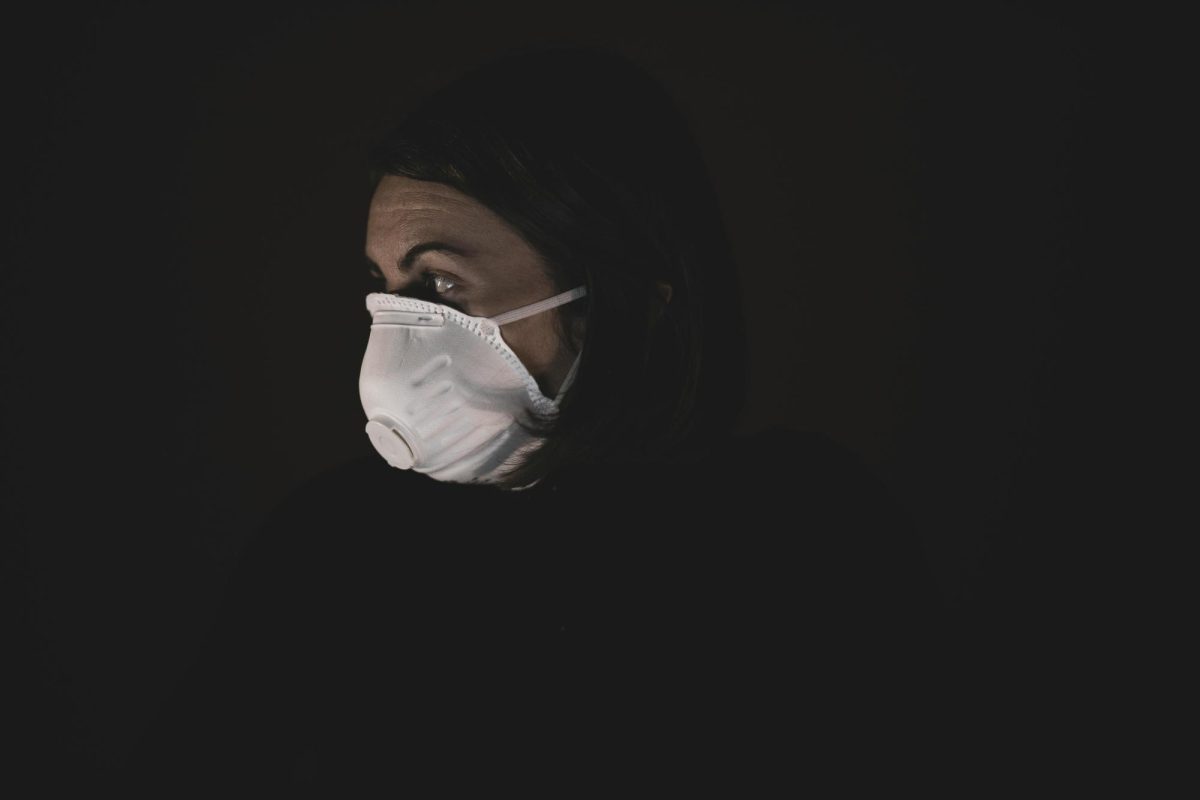







A mask used to be seen as a simple device for safety, as it protects both the wearer and those around them. Today, however, it represents more than health–it reflects how society responds to individual choice. What once was an unremarkable object has now become imbued with meaning.
It all started with COVID-19, a global pandemic that brought masks into everyday life and transformed medical precaution into public expectation. As the virus spread, health officials encouraged the use of masks to reduce transmission. What began as a temporary safety measure soon became a requirement in public spaces, including schools, workplaces, and stores. Over time, masks shifted from being a personal health decision to a visible symbol of compliance, responsibility, or resistance. Wearing or not wearing a mask communicates beliefs, values, and even political identity, often before a word is spoken.
After the immediate danger of the pandemic faded, something unexpected remained: judgment. Today, seeing someone still wearing a mask often prompts curiosity, assumptions, or even discomfort. People may wonder if the wearer is sick, anxious, overly cautious, or making a statement. These silent questions reveal how quickly society assigns meaning to visible differences, especially when they deviate from what is considered “normal”.
One reason masks continue to attract judgment is that they disrupt social norms. Human interaction relies heavily on facial expressions to build trust and connection. A covered face may feel unfamiliar or distant, which may lead to discomfort or misunderstanding. When something interrupts everyday social cues, people often respond by labeling it as strange or unnecessary, even if it causes no harm.
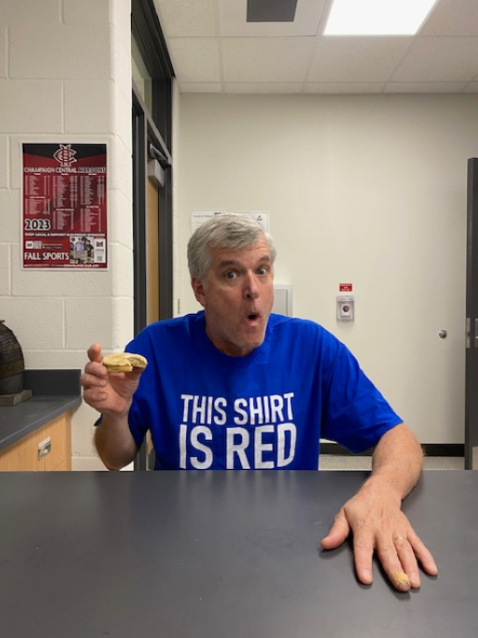
Central Chemistry Teacher, Mr. Gelsthorpe, voiced, “With the prevalence of immunocompromised individuals and high mutation rate of COVID preventing herd immunity as hoped for with the vaccine development, medical masks are still a powerful tool for helping keep others from getting sick.”
Despite widespread vaccination, COVID-19 continues to circulate, and preventative measures such as mask use remain important in limiting transmission, particularly in public settings.
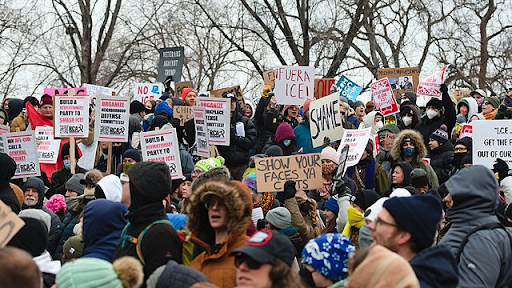
The Unit 4 high schools, Central and Centennial, received a notification on Tuesday, December 16th, informing them of a new policy update regarding a mask ban. The policy stated that while “masks are ‘trending’, they are also a safety concern. Masks reduce ‘face visibility’ and, therefore, make it challenging to quickly identify individuals in the building.” The email was soon withdrawn, and with it came an apology revealing the email was only an “error.”

Many were relieved that the new mandate wasn’t enforced, including Dr. Sean Mullen, professor of health and kinesiology at the University of Illinois. On January 12, 2026, Dr. Sean Mullen expressed his concern during public comment at the weekly Unit 4 school district meeting.
He expressed, “Masks are not a problem to be managed. They are a signal that someone understands the environment. Please do not write policies that discourage awareness or normalize preventable harm. Protect their brains. Protect their bodies. And invest in the air they breathe.”
In recent times, the act of wearing a mask has become a continuous issue often leading to harsh judgment and stigmatization. Many individuals who choose to wear masks do so out of concern for their health, yet they frequently face scrutiny for those who may not understand their motivations. This raises an important question: why would you choose to wear a mask if it wasn’t required? The answer is simple: personal safety should never need permission. The debate surrounding Unit 4 is not just about masks, but about respect for individual health decisions. When schools consider banning something meant to protect students, it forces us to reflect on the kind of environment being created–one that values understanding and wellbeing, or one that prioritizes conformity over care.

olivia • Mar 4, 2026 at 11:20 pm
Masking reflects how we care for one another in the face of shared vulnerability. COVID has the potential to disable anyone, regardless of age or health, yet the act of protecting oneself and others is often met with judgment instead of respect. Choosing to wear a mask is an expression of responsibility, empathy, and foresight. Policies and language that dismiss these decisions such as calling them “trending,” fail to honor the seriousness of the risks and the value of protecting every member of our communities.
Kimberly Hatch Harrison • Feb 13, 2026 at 5:15 am
Immunologist here, glad to see awareness of the serious repercussions of COVID infection. Those of us who are keeping up with the scientific research about this novel virus are doing everything we can to avoid getting infected. Our vaccines & regular boosters are still important for keeping us out of the ICU, but they don’t do much to stop infection. For that, we need HEPA filters and tight-fitting N95 respirator masks. Everywhere you share air.
Normalize protecting yourself and your friends and family. Protect your brain. You’re gonna need that.
Robyn M • Feb 12, 2026 at 9:55 pm
Thank you for writing this. I still mask in public spaces because I care for a bedbound adult, so never want to bring anything nasty home. The judgement!
Kristen B. Caldwell • Feb 11, 2026 at 9:30 pm
Great article, Kiera, thank you for writing it (and thanks to your father for sharing it with a wider readership).
I’d add that my iPhone can recognize me with a respirator on, but not if I’m wearing sunglasses (without any other face covering, just the sunglasses). Our eyes and the exposed portions of our faces can be very expressive. A medical mask, N95 or equivalent, does not impede much. My elderly mother knows when I’m smiling or frustrated. The only issue with our communication is how deaf she is: a respirator does present a challenge for the hearing impaired as they can’t use lip reading to augment their understanding. (That said, there are of course options like clear masks—in my case, I wear an N95 or equivalent around everyone else so I can be barefaced with my 95-year-old. )
Katherine Champaign Central • Feb 11, 2026 at 7:28 pm
Excellent piece, masking is community care!
W. Greene • Feb 11, 2026 at 6:38 pm
Excellent article. Bravo!
Gwen Klemm • Feb 11, 2026 at 5:47 pm
Fantastic comments. You are absolutely correct and your tone is factual without getting preachy. Nice balance.
Stay safe– the world will need intelligent young people to help rebuild.
Katherine • Feb 11, 2026 at 5:01 pm
Lovely write up. It’s encouraging to see young people protecting themselves and standing up for their beliefs.