




























SNAP—short for Supplemental Nutrition Assistance Program—is a government program which lost its funding on November 1st because of the month-long government shutdown. This loss of funding, which happened with Thanksgiving right around the corner, has put a lot of stress on local food banks and is affecting millions of Americans. As a result, the long-standing American holiday, which centers around excessive food, is looking different this year for countless people.
The SNAP program, versions of which have been around since the late 1930s, is designed to help low-income families by supplementing money for healthy groceries. The stability of this program was affected this summer by the passing of the “One Big Beautiful Bill Act” and has once again become strained due to the government shutdown. The Trump Administration, after claiming they would not use emergency funds to help out SNAP recipients, has now agreed to partially fund the program through November.
Despite fingers pointed on both sides of the political aisle about who is responsible for the government shutdown and, subsequently, shortages of SNAP funding, some people feel that energy is misplaced. Elizabeth Moscoso-Anderson, a teacher at Central High School and former social worker, referenced this as a problem that goes beyond political opinions. She went on to specify that “hunger is not partisan.”
Mrs. Anderson also claims current politicians are “making some of the most vulnerable and poor people pawns in [their] government game,” and “[Republicans and Democrats] both need to come to the table because [this is] harming people on both sides.”
Richard Morton, a social studies teacher at Central High School who is helping lead the school’s Food Drive, agreed, stating, “wealthy and powerful people playing politics while people go hungry is not a great look for the nation” and “refusing to fund programs which help children eat is beyond the pale.”
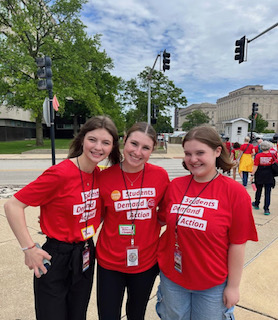
In a closer look at those being harmed by SNAP funding cuts, I interviewed the student in charge of the Central High School Food Drive. Margaret Gengler, a senior at Central, is very passionate about helping out those who are struggling in this difficult time.
“So many people are being impacted by this, and it’s also right before Thanksgiving.” Gengler also referenced her mother’s middle school students asking “how can I get food…with SNAP benefits going away?” showing that children as young as middle school are aware of and scared by the disappearance of SNAP benefits.
That fear is being felt all around the United States right now, including in Champaign itself. Many local businesses are responding by opening up their doors to help out those in their community. One of these is The Literary, whose work Mrs. Anderson described as “amazing” and “incredible.”
The Literary, a cafe and bookshop in downtown Champaign, is welcoming SNAP card holders from 9:00-3:00 every day to get one free meal off its SNAP menu.
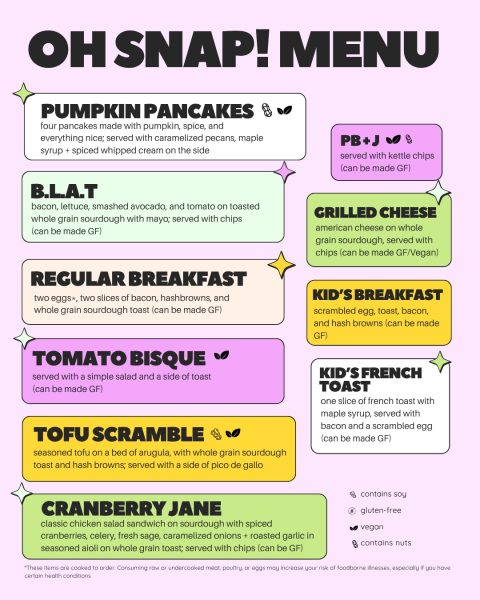
Kallan Buss, manager at the Literary, described the business’ efforts to feed people in the community as “doing the right thing, and the right thing is supporting each other—no matter the cost” with the goal of “nourishing the community in a way that’s gonna help them.”
When asked how others can help, Buss stated that “the one resource that we all have that’s invaluable is time” and that the best thing people can do is “lend…hands.” Buss also referenced a list made by the Champaign-Urbana Public Health District of resources people can utilize if they are struggling to get food.
The opinions in Champaign on this rapidly changing situation continuously boil down to one point, expressed by Kallan Buss.
“Everybody deserves to eat, no matter who you are. Food should not be a rare commodity.”